
What We Learned from Bandwango CEO Mo Parikh at OneWest Tourism
.png)
.png)
The “DMO Technology Trap” is Still Real
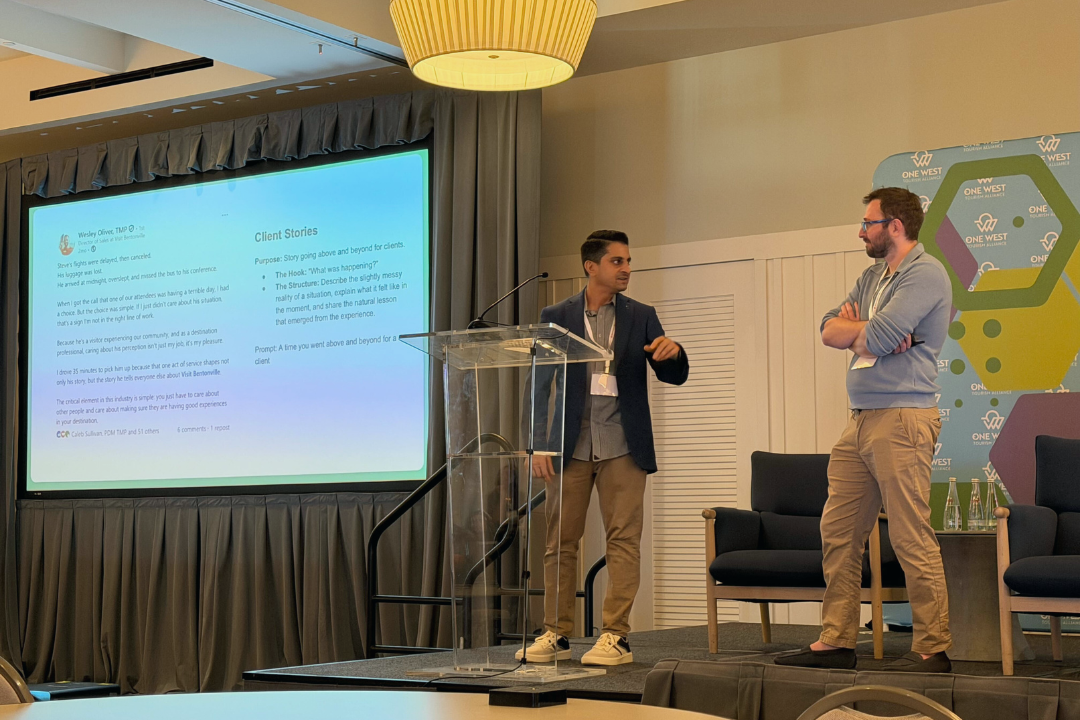
Mo opened with a reality most destinations know too well: great ideas often stall out before they ever launch. Not because they’re bad ideas, but because executing them traditionally meant hiring developers, licensing software, or navigating long RFP cycles. That process comes with real costs – time, money, and fewer opportunities to experiment.
Rethinking the “Build vs. Buy” Decision
One of the more nuanced takeaways: this isn’t about “always build” or “always buy.”
Mo framed the decision around two variables: risk and complexity. High-risk, high-complexity projects (think payments, sensitive data, large-scale systems) still lean toward buying. Lower-risk, lower-complexity ideas are increasingly buildable.
There’s also a growing middle ground, hybrid approaches, where destinations can move faster without fully reinventing the wheel.
The Bottleneck Has Shifted
This was probably the most important shift in thinking.
According to Mo, “code syntax is now a commodity.” In other words, the hard part is no longer translating ideas into code. AI and modern tools can handle much of that.
The real bottleneck is clarity: the quality of what you ask for determines the quality of what gets built.
That’s a big mindset shift for DMOs. It means product thinking, not technical skill, is becoming the differentiator.
Intent Matters More Than Instructions
A big portion of the session focused on what Mo called “intent-driven architecture.”
Instead of vague requests (“build a page where users upload photos”), the goal is to define exactly what should happen, how it should behave, and what edge cases exist.
The more precise the input, the better the output.
He also emphasized something that will feel familiar to anyone using AI tools:
- If you don’t provide enough context, the system fills in the gaps
- And when it guesses, you introduce errors (or “technical debt”)
A Practical Framework for Building Faster
Mo walked through a simple process for actually building ideas quickly – what he referred to as a “vibe coding” workflow:
- Start with a context-dense prompt; give as much detail as possible upfront
- Begin in planning mode, letting the system ask clarifying questions
- Document everything (requirements, architecture, decisions)
- Build in small, independent blocks that has its own role
The “20-Minute Build” Isn’t Just a Headline
To bring it all together, Mo shared a real example: a wine tasting festival tracker that was built late at night, right before launching a digital tasting event solution.
The takeaway wasn’t just speed, it was what speed enables.
When you can build something quickly:
- You can test more ideas
- You can iterate in real time
- You can respond to opportunities as they happen
What This Means for Destinations
If there was one underlying theme, it’s this: the barrier to innovation is no longer technical – it’s organizational and mental.
Destinations that learn how to clearly define problems, structure ideas, and move quickly will have an advantage. Not because they’re building massive systems, but because they’re testing, learning, and iterating faster than everyone else.





.png)
.png)


.png)
.png)
.png)
.png)
.png)
.png)
.png)


.png)

.png)

.png)


.png)

.png)
.png)
.png)
.png)
.png)
.png)
.png)
.png)
.png)

.png)
.png)
.png)
.png)
.png)
.png)
.png)
.png)
.png)
.png)
.png)
.png)
.png)
.png)
.png)
.png)
.png)
.png)


.png)
.png)







.png)


.png)
.png)


-min.jpg)



%20(2).png)


.png)